
Our History
Our heritage goes back to our founding in 1955.
UFP Industries is an American success story, authored by thousands of employees and led by loyal individuals who learned the business from the ground up.
What were the moments and milestones that shaped us? Let’s wind back the clock.
Universal Forest Products incorporates with William F. Grant as major stockholder and only salesman. The company’s sole market is factory-built housing.
1955

Peter F. Secchia joins the company. Ambassador Secchia would lead the company’s early growth and remain as an employee for 40 years, retiring as chairman in 2002.
1962

The company has sales of $12 million. Then-vice president of sales Peter Secchia purchases control of the company. William G. (Bill) Currie, who would become CEO and then chairman, joins the company as a salesman.
1971
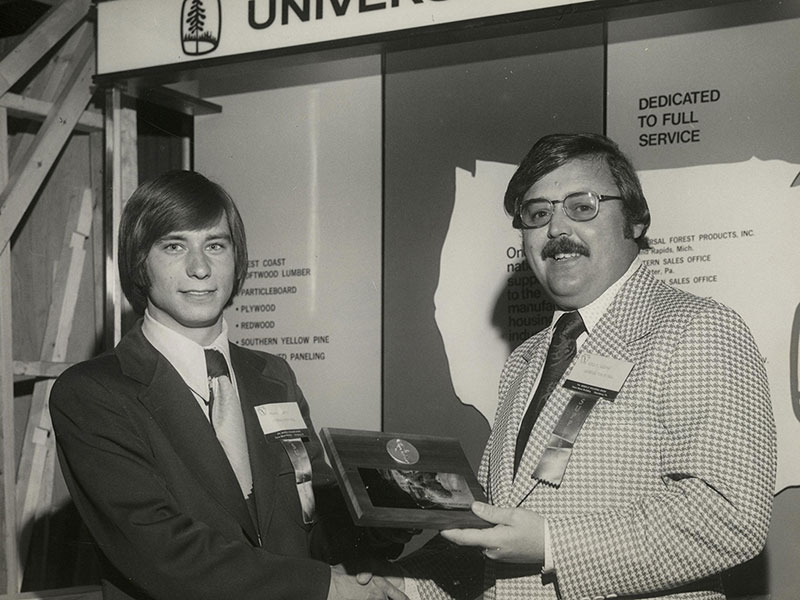
Current Executive Chairman Matthew J. (Matt) Missad joins Universal’s maintenance crew, staying on through high school, college, and law school. After graduating, Matt is hired as Universal’s Director of Legal Compliance.
The company’s Auburndale, Florida plant produces Universal’s first charge of treated lumber. Today, UFP is one of the world’s largest lumber pressure-treaters.
1978

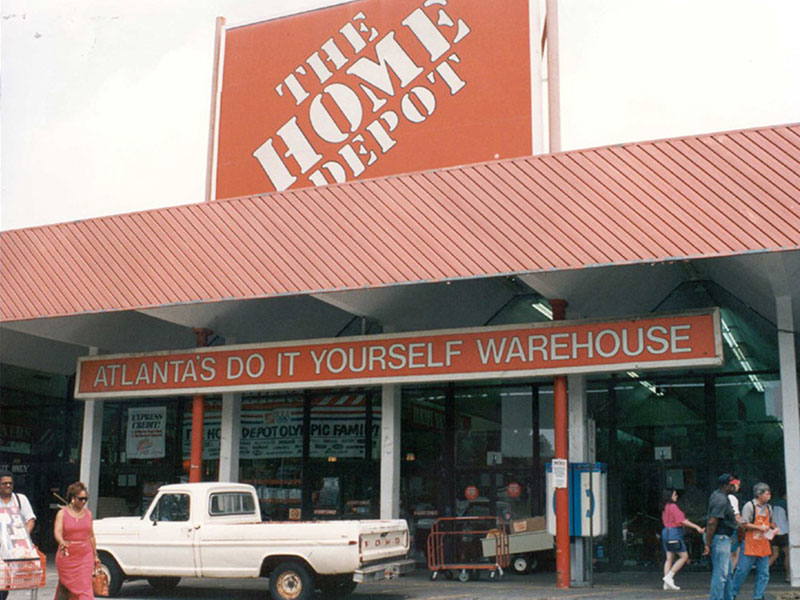
Universal ships the first load of treated lumber to a brand-new company, The Home Depot.
1979
Universal expands its reach to the West Coast, acquiring Far West Fir Company, headquartered in Huntington Beach, California.
1986
Peter Secchia is appointed United States Ambassador to Italy by President George H.W. Bush. Bill Currie succeeds Peter Secchia as CEO.
1989

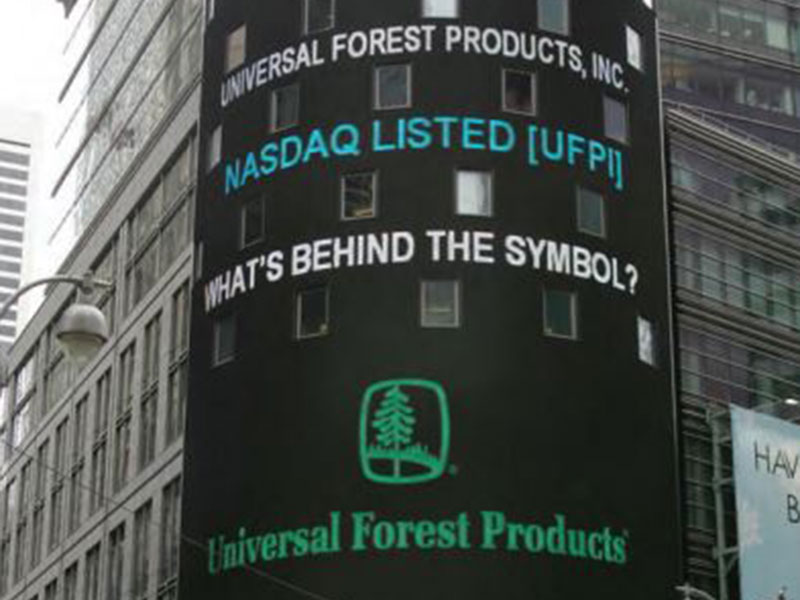
Universal Forest Products goes public, issuing 5.7 million shares at $7 each. Sales are $644 million. The company is named to the Fortune 500.
1993
Universal enters the site-built construction market with acquisitions in Pennsylvania, Texas and Colorado, sparking new and significant growth for the company.
1997
With the acquisition of Shoffner Industries, the company becomes the nation’s largest site-built residential truss manufacturer.
1998
Universal acquires a composite decking facility from Quality Wood Treating, Co., Inc. in Prairie du Chien, Wisconsin, with a goal to become a leader in the wood-alternative decking and railing markets.
2002
Universal celebrates 50 years as a company. The company is named to Forbes Magazine’s “Platinum 400,” an annual listing of America’s best big companies for the seventh time in eight years. Annual sales are $2.7 billion.
Universal acquires the inventor and marketer of the first metal rail baluster, Deckorators, a brand the company would expand into the industry’s most innovative composite decking and railing line.
2005
Michael B. (Mike) Glenn is appointed CEO and Bill Currie is appointed executive chairman of the board.
2006
Osmose’s MicroProTM — which Universal affiliates use to treat wood — is named the first and only wood preservative technology to earn the esteemed Green Cross recognition, which marks it as an Environmentally Preferable Product. (UFP’s ProWood® is treated with MicroProTM.)
Universal adds concrete forming products to its growing portfolio.
2007

Universal is named one of Fortune magazine’s Most Admired Companies.
The company battles through the Great Recession by right-sizing the operations and headcount while improving efficiencies, gaining market share and paying down debt. Despite the macroeconomic headwinds Universal continues its streak of profitability and emerges from the downturn debt-free.
2008
Having successfully steered the company through the Great Recession, CEO Mike Glenn retires. Matt Missad is named the company’s fifth CEO. Universal announces strategies for growth that include adding new products and new markets, and opening doors to offshore opportunities.
Universal begins a transformation into a value-added solutions provider by adding talent; new business units and products, such as our mineral-based composite decking; new research and development capabilities; and manufacturing technology, including automation.
2011

Forbes magazine names Universal as the best-performing company in Michigan, based on total returns.
2016
Universal stock splits 3 for 1. Annual sales reach $3.9 billion
2017
Universal Forest Products changes its name to UFP Industries and reorganizes, dropping geographic management in favor of management by market. Three business segments are announced: UFP Construction, UFP Retail Solutions, and UFP Industrial (now UFP Packaging).
2020

The company acquires PalletOne, the leading manufacturer of new pallets in the U.S., and its Sunbelt Forest Products pressure-treating affiliate.
UFP’s Sunbelt Forest Products acquires Spartanburg Forest Products, making UFP Industries the largest pressure treater in the world.
2021
UFP Industries re-enters the Fortune 500 at #401. Missad is named by Fortune as one of 10 CEO’s that are the “Best Bang For The Buck.”
The company is ranked #10 out of 100 companies in Forbes’ list of “America’s Best Mid-Sized Companies,” and #149 on the Industry Week 500, a list of the U.S.’s largest publicly traded manufacturing companies.
Annual revenue climbs to $9.6 billion with record EBITDA and return on capital.
2022
Matt Missad named chairman of the UFP Industries board of directors while remaining CEO. Bill Currie to serve out his term as director through 2025.
UFP named to Forbes Magazine’s “America’s Best Mid-Sized Companies” for the second consecutive year.
2023
For the third consecutive year, UFP Industries was named to the prestigious FORTUNE 500 list of largest U.S. companies based on sales.
CEO Matthew Missad moves to Executive Chairman role; William “Will” Schwartz named CEO.
2024

UFP Industries celebrates 70 years in business on February 9. Founded in 1955, the company was built by hardworking, driven individuals who embrace challenges and create lasting impact.
2025
